

Data last verified: August 2026
Hospice care shifts the focus from curing a terminal illness to managing pain and supporting quality of life for the resident and family.
Sadie G. Mays coordinates hospice services through a licensed hospice team of physicians, nurses, social workers, chaplains, and volunteers working alongside facility staff.
Families weighing hospice for a loved one can discuss eligibility and care planning with the admissions team before a decision is finalized.

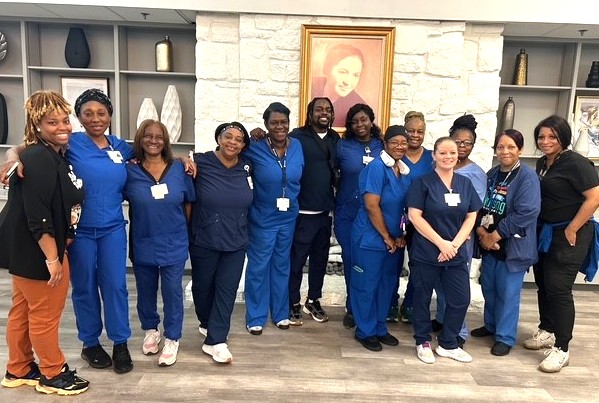
Skilled nursing care is a level of medical care that requires a licensed nurse or therapist to perform, order, or directly supervise, distinguishing it from custodial care that assists with daily activities like bathing or dressing alone.
Skilled nursing care includes IV therapy, wound care, injections, physical and occupational therapy, and ongoing monitoring of chronic conditions such as heart disease, renal disease, and post-stroke recovery. Medicare and most insurance plans require a documented skilled need, meaning the resident’s condition requires daily professional intervention that cannot be safely provided at home.
The hospice team coordinating with Sadie G. Mays includes a physician, nurses, social workers, chaplains, and volunteers, who develop an individualized care plan addressing the resident’s pain management, symptom control, and emotional and spiritual needs.
The team works alongside facility nursing staff so residents receive hospice-level comfort care without transferring to a separate facility.
Families can review the facility’s long-term care services for residents who transition into hospice while already living at Sadie G. Mays.
Families supporting a loved one through this period can also review respite care options, which give a primary caregiver a scheduled break while the resident continues receiving care.
Hospice Team Role | What They Provide |
Hospice physician | Certifies terminal prognosis, oversees the medical plan of care |
Hospice nurses | Pain and symptom management, coordination with facility nursing staff |
Social workers | Family support, care coordination, and practical planning |
Chaplains | Spiritual support for the resident and family, regardless of faith tradition |
Volunteers | Companionship and additional support for residents and families |
A resident qualifies for the initial Medicare hospice benefit period when the hospice physician, along with the attending physician if the resident has one, certifies a terminal illness with a medical prognosis of six months or less if the illness runs its normal course, per CMS hospice program rules and 42 CFR § 418.22.
Later benefit periods require recertification by the hospice medical director or a hospice physician, and starting with the third benefit period, CMS requires a face-to-face encounter within 30 days before recertification.
The resident or their representative also signs an election statement choosing hospice comfort care and waiving standard Medicare coverage for treatment intended to cure the terminal illness during the election period.
A prognosis of six months or less is a clinical estimate, not a fixed deadline — residents who live beyond the initial prognosis continue receiving hospice care as long as the hospice medical director recertifies the terminal diagnosis at the start of each new benefit period.

Medicare Part A covers hospice care at $0 for most covered services once a resident elects the hospice benefit, per Medicare’s hospice care coverage rules.
Coverage runs in defined benefit periods rather than a single continuous stay, and each period requires fresh certification before it begins.
Hospice Benefit Period | Length | Requirement |
First period | 90 days | Physician certification of terminal prognosis |
Second period | 90 days | Recertification |
Subsequent periods | 60 days each, unlimited | Recertification, plus a face-to-face encounter starting with the third period |
Families can review the complete Medicare hospice benefit rules on Medicare.gov to understand what remains covered and what a hospice election changes about existing Medicare coverage.
Families can confirm hospice eligibility timelines against a physician’s prognosis and talk through next steps with the Sadie G. Mays admissions team at 678-420-2946.
Hospice care requires a terminal prognosis of six months or less and a formal election to stop curative treatment, while palliative care manages pain and symptoms for a serious illness at any stage, alongside ongoing curative treatment.
A resident can receive palliative care while still pursuing a cure, but hospice care specifically begins once the goal of care shifts to comfort rather than cure.
Skilled nursing care and long-term care focus on treating, rehabilitating, or supporting a resident’s ongoing medical and daily-living needs, while hospice care shifts that focus entirely to comfort once a terminal prognosis is certified.
Residents already receiving skilled nursing care at Sadie G. Mays can transition to hospice services within the same facility if their condition and prognosis change, avoiding an additional relocation during an already difficult period.
Families can review the complete comprehensive hospice care guide for a fuller walkthrough of how hospice care is typically delivered at home, in a hospice facility, or within a nursing facility like Sadie G. Mays.
Families begin the hospice conversation by discussing prognosis and goals of care with the resident’s attending physician, then contacting the admissions team to coordinate with the facility’s hospice partners.
The admissions team can walk families through how hospice services integrate with a resident’s existing care plan at the facility.
Families supporting a hospice resident may also find the facility’s guidance on caregiver self-care helpful during this period.
Families ready to discuss hospice care for a loved one can reach the Sadie G. Mays admissions team at 678-420-2946.
What is the difference between hospice care and regular medical treatment?
Hospice care shifts the goal of treatment from curing a terminal illness to managing pain and symptoms for comfort. Regular medical treatment continues pursuing a cure or recovery. Electing hospice means choosing comfort-focused care over further curative treatment for the terminal condition.
Who certifies that a patient qualifies for hospice care?
Both the patient’s attending physician (if they have one) and the hospice physician must certify a terminal prognosis of six months or less if the illness runs its normal course, under Medicare’s hospice certification requirements.
Does Medicare cover the full cost of hospice care?
Medicare Part A covers most hospice-related services at $0 cost once a resident elects the hospice benefit. Some services, such as certain prescription copays, may carry a small cost. The hospice benefit generally does not cover room and board.
Can a resident receive hospice care for longer than six months?
Yes. The six-month prognosis is a clinical estimate, not a hard limit. Residents who live beyond it continue receiving hospice care as long as the hospice medical director recertifies the terminal prognosis at the start of each new benefit period.
Can a resident stop hospice care once it begins?
Yes. A resident or their representative can revoke the hospice election in writing at any time, which restores standard Medicare coverage, including curative treatment. The resident can re-elect hospice later if they remain eligible.
Is hospice care the same as palliative care?
No. Palliative care manages symptoms at any stage of a serious illness, alongside ongoing curative treatment. Hospice care specifically requires a terminal prognosis and a decision to stop curative treatment in favor of comfort-focused care.
Can a resident receive hospice care while still living at Sadie G. Mays?
Yes. The hospice team coordinates with facility nursing staff so a resident can receive hospice-level comfort care without relocating, allowing residents to remain in a familiar setting during this stage of care.
Who is on a hospice care team?
A hospice team typically includes a hospice physician, nurses, social workers, chaplains, and volunteers. Together, they address the resident’s physical, emotional, and spiritual needs, and provide support and guidance for family members throughout the process.
Are hospice programs regulated in Georgia?
Yes. Georgia hospice programs are licensed by the Healthcare Facility Regulation Division under the Georgia Hospice Law, O.C.G.A. § 31-7-170, and a state license is also a prerequisite for Medicare certification as a hospice provider.
Hospice care at Sadie G. Mays shifts the focus to comfort once a physician certifies a terminal prognosis of six months or less, delivered by a coordinated team of physicians, nurses, social workers, chaplains, and volunteers.
Medicare Part A covers most hospice services at $0 cost, running through two 90-day periods and then unlimited 60-day periods with ongoing recertification.
Residents can receive hospice care without relocating from the facility, and families can revoke the election at any time if circumstances change.
Families ready to discuss hospice care for a loved one can reach the Sadie G. Mays admissions team at 678-420-2946.