
What to Bring to a Skilled Nursing Facility After a Hospital Stay (Complete Checklist)
Originally published: January 2026 | Reviewed by Sadie Mays

Originally published: January 2026 | Reviewed by Sadie Mays
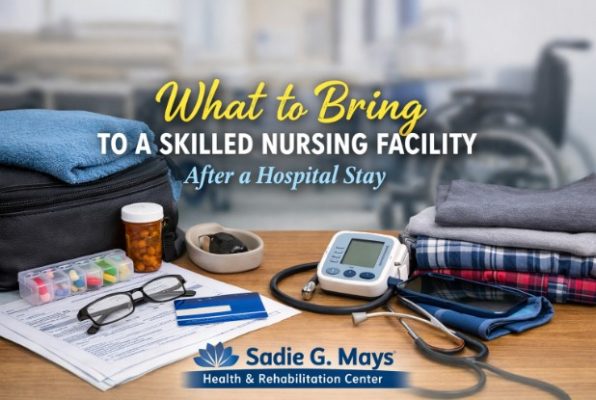
If your loved one is moving from the hospital to a skilled nursing facility, packing the right items prevents delays in admission, missed medications, and unnecessary stress.
Use this checklist to cover documents, devices, therapy clothing, and comfort items—without bringing valuables or items that facilities typically restrict.
The right items will make your rehab stay more comfortable and help your care team provide better care. Overpacking or bringing the wrong stuff, though, can just make things more complicated.
Proper preparation is essential to ensure a smooth transition from hospital to skilled nursing care. Most facilities have specific rules about what you can and cannot bring.
This guide covers what you need for your skilled nursing stay. You’ll see which documents to bring on day one, which medications to list, and which personal items will help you feel at home during your rehabilitation.

The first 24 hours in a skilled nursing facility really set the tone for your stay. You don’t need to bring everything all at once.
Just focus on these immediate essentials:
Bring additional items later, once your loved one has settled in. Keep the first trip manageable and straightforward.
Label everything with your loved one’s name using a permanent marker or laundry-safe labels. Facilities handle a lot of residents, and items get mixed up quickly.
Leave jewelry and valuables at home for now. Facilities usually have limited security for personal items. You can always add more comfort items during your next visit, once you see what the room needs.
Sadie G. Mays Health & Rehabilitation Center can help you prep for a smooth hospital-to-SNF transition—ask our admissions team what to pack. Schedule a tour.
If you’re ready to get started, call us now!

Gather several important documents before admission. You’ll need advance directives, a power of attorney, your health insurance card, and a complete medical history. Having these ready helps staff provide the right care and respect your wishes.
Try to create power of attorney and advance directives documents before entering skilled nursing. A healthcare power of attorney names someone to make medical decisions if you can’t communicate.
Advance directives tell doctors and nurses what treatments you do or don’t want in specific situations.
Talk to the hospital social worker or your doctor about getting these documents done quickly. Many facilities offer basic forms, but consulting an attorney ensures they’re legal in your state.
If you don’t have these, family members may face delays in making care decisions during emergencies.
At a minimum, provide clear emergency contact information for family members who should be notified about your care. Write down their full names, phone numbers, and how they’re related to you.
Include your medical history with current medications, allergies, past surgeries, and ongoing health conditions. Bring your health insurance card and any Medicare or Medicaid documentation required by the admissions process.
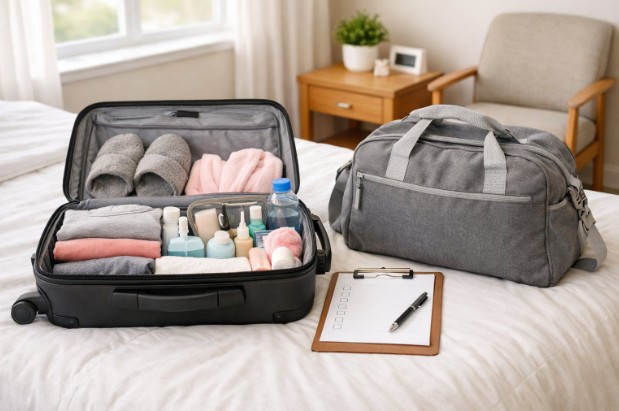
Bring a written or digital list of your medications with dosages and times you take them. This helps the nursing staff understand your treatment plan and prevents medication errors.
Leave the actual medication bottles at home. The skilled nursing facility will provide and manage all medications for you. Their pharmacy system handles proper dosing and timing.
| Item | Reason |
| Prescription bottles | The facility provides medications |
| Over-the-counter medicines | Staff must approve all medications |
| Vitamins and supplements | Must be ordered through the facility |
| Herbal remedies | Need doctor approval first |
The nursing facility controls all medications you get. This prevents dangerous drug interactions and ensures staff can properly monitor you.
You may need to restart certain medications or discontinue others you were taking before hospitalization.
Bring your insurance card, photo ID, and your medication list. The admissions team will review your records and coordinate with your doctors regarding your medication needs.
You need comfortable, loose-fitting clothes that allow you to move freely during therapy sessions. Pack items that are simple to put on and take off, especially if you have limited mobility.
Stretch pants work great because they move with your body during physical therapy. Avoid jeans or stiff fabrics that make moving harder. Elastic waistbands make dressing easier and more comfortable, too.
Bring enough clothing for about a week so you can rotate outfits between laundry days. Pack basics like:
Walking shoes are a must for therapy and daily activities. Choose supportive sneakers with non-slip soles and closures you can manage yourself.
Skip flip-flops, high heels, or shoes with open backs—those are just asking for trouble. Your clothing should be modest and appropriate for a clinical setting.
Avoid clothing with drawstrings, complex fasteners, or multiple layers that can make therapy more difficult.
Most facilities offer laundry service, so you don’t need to overpack. Label your clothes with your name to prevent mix-ups. Bring items you wouldn’t mind getting stained during meals or therapy activities.
Bring personal hygiene products your loved one uses at home. Familiar items help them keep their normal routine during recovery.
Pack these basic toiletries:
Most facilities provide basic toiletries, but personal care items from home just feel better. Your family member will appreciate using products they know.
Keep things simple and make sure everything is labeled. A waterproof bag or caddy is handy to keep it all together.
Women might want feminine hygiene products, hair ties, and makeup if they usually wear them. Men might want aftershave or beard-care products.
Consider denture supplies, such as denture adhesive and cleaning tablets, if needed. Nail clippers and files are suitable for basic grooming.
Skip expensive items or big bottles. Space is tight, and skilled nursing packing should be practical.
Check with the facility about electrical items such as razors or hair dryers. Some places have rules about what you can plug in. Battery-operated versions usually work better.
Don’t forget glasses, hearing aids, and their cleaning supplies if your loved one uses them daily.
Need a checklist and guidance on meds, devices, and paperwork? Our team at Sadie G. Mays Health & Rehabilitation Center can guide you. Contact us.
If you’re ready to get started, call us now!
If you use medical devices at home, you’ll likely want them at the skilled nursing facility as well. Bring your own equipment when you can—it just feels better and fits right.
Essential Medical Devices to Pack:
Some facilities provide things like oxygen concentrators and tanks, but not everything. It’s best to call ahead to confirm what they provide and what you’ll need to bring.
Write your full name on every item with a permanent marker or use sturdy adhesive labels. This helps prevent your stuff from getting lost or mixed up with someone else’s things.
Label each part of multi-part equipment, such as CPAP masks, tubing, and power cords. It’s a little tedious, but it really helps.
Bring any customized equipment that’s fitted just for you. Think custom wheelchair cushions, special braces, or orthotics—those are tough to replace in a pinch.
Pack instruction manuals or care guides for any complicated gear. Include contact information for equipment suppliers as well, in case something breaks or needs replacement.
Don’t forget to pack extra supplies such as batteries, filters, or tubing. You never know what might run out during your stay.
Check your facility’s policy on personal medical equipment before you go. Some items might need staff approval.
Bringing familiar items can really help your loved one settle in. Family photos in small frames are a nice touch—just enough to brighten up a bedside table or windowsill.
Personal touches make the room less clinical. Pack a favorite blanket or a throw pillow from home.
Even a familiar clock or lamp can make a big difference, softening the atmosphere and helping with orientation.
Keep these practical items on hand:
Space in skilled nursing rooms is tight, so don’t overpack. Forget about bringing big furniture pieces—the facility already provides what you need.
Safety trumps decoration every time. Avoid items with long cords that could trip someone. Leave candles, incense, or anything with an open flame at home.
Check with staff before you bring in electrical items. They need to meet the facility’s safety standards.
You can personalize their door or room entrance, if the facility permits. Maybe add their name or a small wreath. It makes the space feel more welcoming and helps them find their room. Always ask the staff before hanging anything up.
Most skilled nursing facilities have a list of things you just can’t bring. It’s all about keeping everyone safe, even if some rules seem strict.
Leave these items at home:
Some places have unique rules about activities and banned items that can vary. It’s smart to call ahead and double-check before you pack.
Your loved one’s care team will provide you with a complete list of restricted items upon arrival. They’ll usually suggest safe alternatives too.
For example, battery-operated candles instead of real ones, and the facility might have approved hair dryers for residents.
Honestly, it’s just easier to keep valuables and off-limits items safe at home instead of trying to store them at the facility.
Try to plan your transfer during off-peak hours. Morning arrivals between 9 AM and 11 AM usually work best because staff are fully available and the facility is running at normal capacity.
Call the facility 24 hours before you arrive. Double-check your room assignment and ask about any last-minute requirements.
This simple step can save you from delays and mix-ups on admission day.
Bring these items in your vehicle:
Atlanta traffic is unpredictable, so allow an extra 30 to 45 minutes for travel time. If you’re crossing town during rush hours, you’ll need that buffer.
Designate one family member as the primary point of contact for facility staff. Make sure this person knows your loved one’s medical history and can answer questions during admission.
Park in visitor parking and check in at the main reception desk. Staff will direct you to the right wing and hand out any access codes or visitor badges you need.
Complete these tasks before leaving the hospital:
Your hospital discharge-to-skilled-nursing-facility transfer should include all necessary documentation; otherwise, continuity of care is at risk.
Coordinating a hospital-to-SNF move in Atlanta? Our team can confirm what to bring for intake at Sadie G. Mays Health & Rehabilitation Center. Contact us.
What should I bring on Day 1 to a skilled nursing facility after a hospital stay?
Bring a small Day-1 bag: photo ID and insurance card, emergency contacts, an updated medication list, glasses/hearing aids/dentures with chargers, one comfortable outfit and non-slip shoes, plus your phone and charger. Confirm facility requirements.
Should I bring prescription medications from the hospital to the skilled nursing facility?
Usually, bring an accurate medication list and discharge paperwork first. Some facilities request medications in their original bottles; others prefer to send orders to their contracted pharmacy to avoid discrepancies after transfer. Ask admissions what they want before packing medications.
What documents are needed for skilled nursing facility admission?
Common admission documents include a photo ID, insurance cards, emergency contacts, recent medical records/discharge summaries, a current medication list, and, if applicable, legal decision-making documents such as an advance directive, a durable power of attorney, or guardianship papers.
How many clothes should I pack for short-term rehab in a skilled nursing facility?
Plan for therapy-friendly outfits and weekly laundry: typically 3–7 comfortable outfits, underwear and socks for each day, pajamas, and a light jacket. Choose easy-on clothing and non-slip shoes, as you’ll be moving frequently during therapy.
Can I bring my own walker, cane, CPAP, or other medical equipment?
Yes—bring the assistive devices you use at home (walker, cane, braces, orthotics, CPAP) along with cases, supplies, and chargers. Label everything. Admissions can confirm which items will be used and which the facility provides.
What should I not bring to a skilled nursing facility?
Avoid valuables and prohibited/safety items: large cash, expensive jewelry, weapons/sharps, extension cords, aerosols or glass containers, and non-prescribed medications or ointments unless ordered. Policies vary, so request the facility’s “do not bring” list.
Can I bring electronics, cash, and comfort items to a SNF rehab stay?
Most facilities allow basic electronics (phone/tablet) and small comfort items, such as photos, a blanket, or books. Keep cash to a minimum and avoid high-value devices if possible. Always label chargers and ask about Wi-Fi and power-strip rules.